
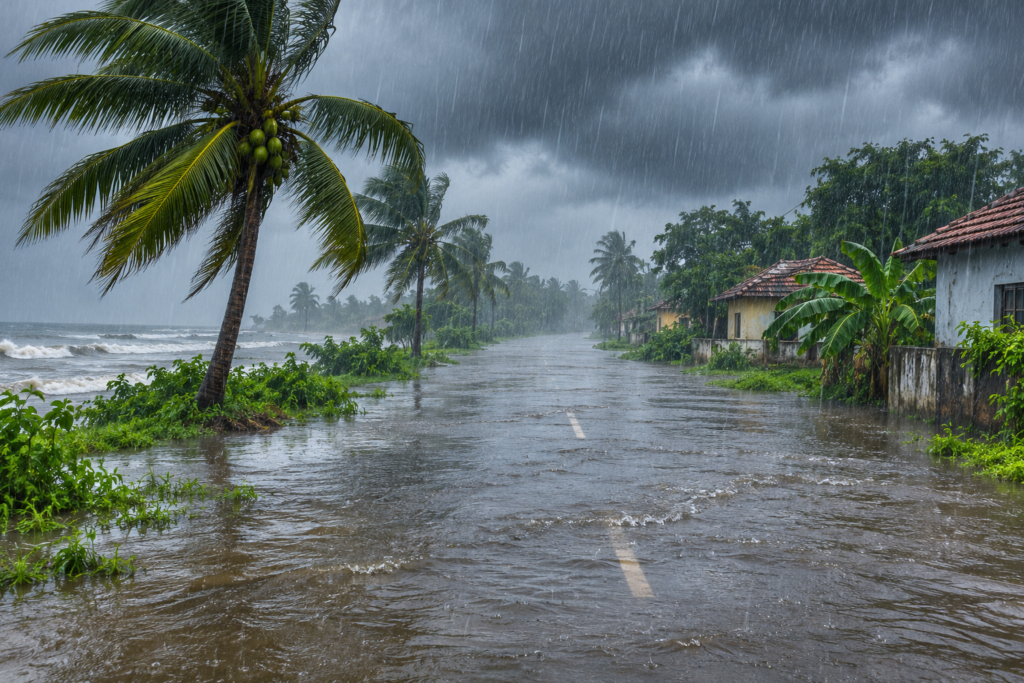
On November 4, 2026, the India Meteorological Department tracked the remnant of Severe Cyclonic Storm Murasu over east Telangana and adjoining coastal Andhra Pradesh. Its cyclone archive lists the system at the well-marked low-pressure stage that day. For travellers, the change in classification is one part of the picture. District rain warnings, local flooding reports and updates from transport operators are the information that determines whether a route is usable. IMD cyclone bulletin archive
What the November 4 IMD bulletin says about Murasu
IMD’s press release index records a November 3 bulletin describing the severe cyclonic storm over south coastal Andhra Pradesh. The November 4 release identifies the weakened remnant over east Telangana and adjoining coastal Andhra Pradesh. These labels refer to successive stages of the same weather system. When reading coverage that mentions a depression or a low-pressure area, check when the bulletin was issued. Reports written hours apart can accurately describe different stages. IMD press release index
The classification describes the system’s intensity. Rain and the effects of earlier rainfall can still matter after winds ease. In a low-lying neighbourhood, a short period of intense rainfall can affect roads whose drains are already full. On an intercity trip, a bridge, underpass or feeder road may become the weak point even if conditions at both ends of the journey look manageable.
How to check rain alerts for your district
Begin with the IMD forecast or warning for the district you are leaving. Check the districts along your route and the one you are going to. Read the issue time and the validity period together. A bulletin can be recent but cover a period that ends before you plan to leave, while another might be specifically concerned with the evening or following morning.
Check local notices for action on roads, schools, ports, ferries or emergency shelters. A national forecast describes the expected weather across a broad area. District authorities are better placed to report a closure at a particular crossing or a restriction in a coastal village. In Andhra Pradesh, the state disaster management authority’s cyclone monitoring page provides local context alongside the IMD bulletins. Andhra Pradesh cyclone monitoring
How to decide whether to travel
For a road trip, identify a main route and check whether authorities have published a diversion. Recheck the conditions before setting off and at a safe stopping point if the trip spans several hours. If water covers the road, turn around where it is safe to do so. Depth, current and road damage can be hard to judge from a vehicle. Choose a confirmed open route and allow extra time, or wait for a closure to be lifted.
For a train journey, look up the service by train number and date, then check the boarding station. A service can run with a change of route or skip a station. For a flight, check the airline’s message and airport flight status before leaving home. A confirmed flight can still require a longer journey to the terminal if access roads are affected. Keep the operator’s contact details available and save any revised booking confirmation. BuzzyBanana’s Diwali flight booking checklist
Fishing and small-boat trips require a separate marine check. Use the current marine bulletin and instructions from local port or fisheries authorities, which can apply to particular coastal stretches. Conditions can differ offshore and along the coast. If a local authority has restricted movement, wait for its update before making plans that depend on a reopening.
If heavy rain develops while you are out
Pause in a safe place and reassess the next section of the route. If your destination is reached by a single low-lying approach road, call ahead to ask whether that stretch remains open. Keep your phone charged and tell someone where you are headed and when you expect to arrive. If authorities issue evacuation instructions for your location, follow them and use the designated route.
If you are planning for someone who needs step-free access, medical supplies or a connecting service, check what a delay would change before leaving. A safer departure window may also be easier to arrange when the operator knows about an accessibility request in advance.
Frequently asked questions
Where was Murasu’s remnant on November 4?
IMD listed a well-marked low-pressure area over east Telangana and adjoining coastal Andhra Pradesh. The archive contains bulletins from successive stages of the system.
Can rain disrupt a trip after a cyclone weakens?
Yes. Rain may continue and earlier rainfall can leave roads flooded or damaged. Local notices and current warnings are useful for deciding when and where to travel.
How can I tell whether a warning applies to my journey?
Check the districts on your route, the validity period in the bulletin, and any road or transport advisories for the hours you plan to travel. Save those updates and refresh them before departure.