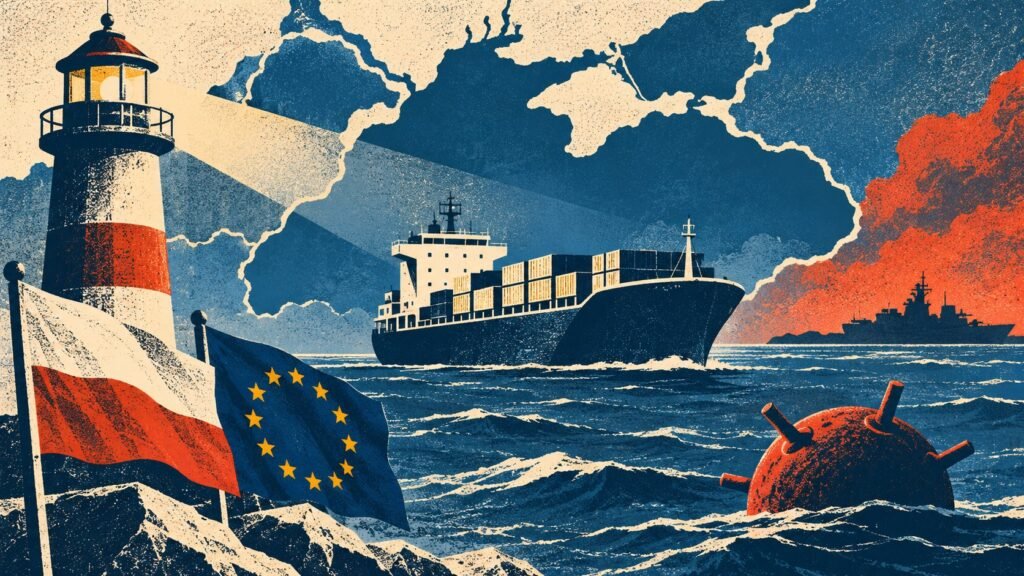
Black Sea shipping affects markets well beyond the region. Ukraine uses its ports to move agricultural goods and other cargo, and ships, crews and port workers need dependable access to keep those routes operating. Poland’s connection comes in part through the EU’s land routes with Ukraine and through the wider European freight and food markets. A change at a port can have a visible effect on scheduling before anyone can reliably estimate its effect on prices.
## Distinguish the maritime corridor from the earlier grain deal
The UN-facilitated Black Sea Grain Initiative expired in July 2023. Ukraine continues to operate a separate Special Maritime Corridor. In September 2026, the International Maritime Organization described a project to support safety, security, environmental protection and trade facilitation as Ukraine operates that corridor. The status of one vessel or one terminal cannot establish the condition of the entire route. Follow official notices for the specific port and date in question. IMO maritime corridor project update IMO Black Sea safety information
## How disruptions reach freight and food markets
When a berth closes, a shipment may wait offshore, move to another terminal or take an alternative route. Each change can affect loading dates and costs. A shipping company may also reassess crew safety, insurance and the availability of a vessel for its next voyage. For grain, the wider effect depends on the duration of the disruption, volumes involved, storage capacity and alternative suppliers. Look for several weeks of throughput data before inferring a sustained change from a single incident.
## Why Poland matters to alternative routes
The European Commission describes the EU–Ukraine Solidarity Lanes as alternative logistics routes connecting Ukraine with EU markets and onward destinations. Poland is part of this broader network. Land freight can keep some cargo moving when maritime capacity is constrained, and it also needs border processing, compatible rail arrangements, wagons or trucks and available storage. If an exporter switches routes, the relevant question is how much cargo the route can handle at the required time and cost. European Commission overview of the Solidarity Lanes
## What to check when a new incident is reported
Start with the location, date and type of facility involved. Check whether an authority has confirmed injuries, vessel damage or a service interruption. Then look for operational updates about port access, vessel movements and repair timelines. A confirmed attack and a confirmed halt in all commercial movements are different claims. If a report links an incident to food or energy costs, look for evidence about affected volumes and available alternatives. For readers in Poland, also look for any confirmed change in freight capacity or border processing before drawing conclusions about domestic supply.
Over time, the more informative signals are repeated interruptions, sustained changes in traffic and documented investment in backup routes. Compare those measures at the same time of year where possible. Harvest schedules and other seasonal patterns can change shipment volumes even when routes remain open.