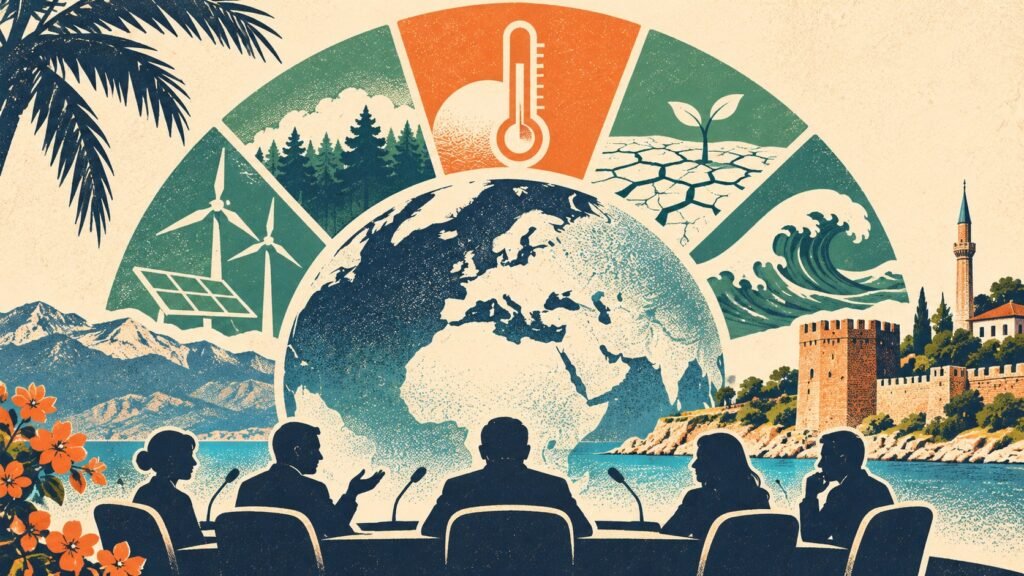
The UN Climate Change Conference known as COP31 is scheduled for November 9–20, 2026, in Antalya, Türkiye. Governments will meet alongside observers and other participants. Several formal bodies convene during the conference, including the parties to the Paris Agreement. Readers following the event can get a clearer picture by separating the daily announcements from the decisions governments formally adopt. UNFCCC COP31 conference information
## What implementation looks like
Governments arrive with different energy systems, development needs and budgets. A useful question is whether a proposal names who will carry it out, the deadline and how progress will be tracked. In electricity, for example, an announcement about expanding renewable generation can leave important questions about grids, permitting and finance. An implementation plan can show which of those barriers a government intends to tackle and how it will measure the work.
When reading a statement about the energy transition, identify its scope. It may refer to electricity generation, all energy use or particular industries. Check whether a target is expressed as installed capacity, actual power generated or emissions avoided. Each answers a different question. Look for a baseline year and a named institution that will report progress.
## Watch the terms behind climate finance
The size of a finance announcement is only one part of the story. Check whether the money is a new commitment or part of an earlier pledge. Then look at who can access it and whether it takes the form of a grant, loan or guarantee. A loan for a revenue-generating energy project has different implications from grant funding for flood protection or early warning systems. Read the financing period and distinguish an announced commitment from money already approved or disbursed.
## Follow adaptation alongside emissions
Adaptation covers measures such as managing flood risk, preparing for heat and improving early warning. A useful way to assess an announcement is to look for the communities it serves and the practical changes it funds. A government might describe a national target while a city needs staff, equipment and a maintenance budget to act on it. Check whether the work is funded and what will be measured after it starts.
## Read the formal documents after the headlines
On a busy conference day, a delegation may announce an initiative, negotiators may circulate a draft and a formal body may adopt a decision. Check the document label and date before repeating a claim. Look for brackets or alternative language in negotiating text, and verify the final version through the UNFCCC. If a headline says countries agreed to do something, check which countries joined, which body adopted the text and the verb it uses. Those details tell you whether the news is an invitation, a commitment by a group or a decision under the conference process.