
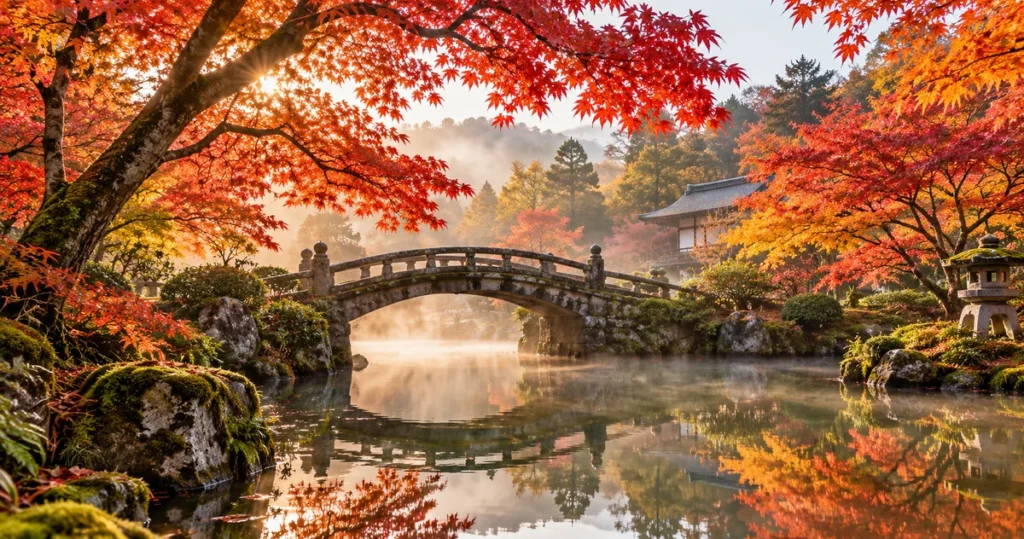
For a Japan autumn 2026 trip, use the foliage forecast to choose a sensible region and travel window, then leave room for the season to behave differently. A single predicted peak date is not a guarantee that every garden, mountain or street will look the same when you arrive.
Japan National Tourism Organization’s 7 October update introduces the 2026 autumn leaves forecast and describes the season’s broad progression from the north toward the south, with mountain areas generally changing before city parks and gardens. The forecast is a planning guide rather than a promise about an individual tree. Source: JNTO’s 2026 autumn forecast update.
This guide was researched on 30 October 2026. It offers an original itinerary-planning method, not a firsthand trip review. It does not quote live fares, guarantee leaf conditions or determine visa eligibility.
Use the forecast at the right scale
Begin with the region and time available. Check the official autumn leaves forecast and distinguish a broad seasonal window from a specific local report. Check when the information was updated before comparing it with a screenshot saved earlier.
Then look at the places you actually want to visit. A city park, a higher-elevation viewpoint and a sheltered garden may not follow an identical schedule. A plan that depends on all three reaching their best colour on the same day is fragile.
Instead, identify why each stop interests you beyond the leaves. A museum, neighbourhood walk, food experience or historic site can make the day worthwhile when the weather changes. This is not a reason to ignore the forecast; it is a way to avoid making the entire trip depend on it.
Keep a simple distinction in your notes: forecast, current local observation and confirmed booking. These are different kinds of information. A forecast can guide a choice, but it should not be recorded as a condition you have already observed.
Choose fewer bases and more useful options
Our suggested approach for a first autumn trip is to compare two potential bases before assembling a long list of distant destinations. For each base, note arrival access, accommodation, nearby places of interest and an indoor fallback.
This is an illustrative planning method, not a recommendation that every visitor should book exactly two hotels. A short trip, mobility needs or a particular interest may justify staying in one place. The objective is to understand the cost and effort of moving before adding another stop.
Imagine a six-day itinerary with three nights in each base. The travel day between them is not a full sightseeing day in both cities. Account for packing, checking out, reaching the station, travelling and settling into the next accommodation. A route that looks efficient on a map can still feel rushed.
For each day, choose one main activity and one optional nearby alternative. Keep the alternative genuinely usable: a distant attraction that requires another long transfer does not provide much flexibility when the main plan changes.
Build an autumn day with a fallback
A useful planning card has five items: main outdoor stop, nearby alternative, weather check, transport information and the point at which you will decide whether to switch plans. That final item prevents the group from spending the whole morning debating yesterday’s forecast.
For example, a hypothetical day could start with a garden visit if conditions are comfortable, then continue to an indoor exhibition if rain intensifies. This is an example of a decision structure, not a statement that a specific garden or museum has availability.
Check opening hours, admission conditions and transport through the relevant operator or attraction before you go. Seasonal illuminations, closures and timed entry should be verified individually. Do not assume an autumn-themed photograph means an attraction is open late every evening.
Allow space for meals and rest. A plan with no margin becomes harder to follow when an attraction is crowded or a walk takes longer than expected. If travelling with others, discuss which activities are optional so nobody feels obliged to keep moving solely to complete a list.
Pack for variation rather than a postcard
JNTO’s autumn guide describes cooler conditions and the value of planning for the season. Use destination-specific weather information close to departure, including the places at different elevations that you intend to visit. Source: JNTO autumn travel guide.
Our practical packing suggestion is to choose layers you can combine and shoes suited to the walking you actually plan. A city-focused visit and a mountain walk are different activities; do not infer that ordinary sightseeing advice covers a demanding trail.
Check the bag you will carry during the day. Space for an extra layer, water and a way to protect essentials from rain may matter more than carrying every item you own. Keep necessary medication and travel documents accessible according to your own needs and applicable rules.
If your plan includes a trail or remote viewpoint, seek the relevant local safety and access information. This article does not assess a route’s condition, your fitness or specialist equipment requirements.
Keep the money and paperwork visible
Before booking, verify entry requirements for your nationality and circumstances through the appropriate official government or consular source. A travel story, a friend’s recent experience or an airline advertisement cannot determine your eligibility.
Build the budget from dated quotes. Separate accommodation, intercity travel, local transport, meals, admissions and a contingency amount you choose. Mark which bookings can be changed and what each cancellation condition actually says.
Compare itineraries by the whole trip cost, including the effort of moving. A cheaper room far from the activities you value may add transport time and expense. Conversely, paying more for flexibility only helps if you understand when and how a booking can be changed.
Do not assume a transport pass is automatically the best option. List the journeys you expect to take and compare the relevant operator’s current products and ordinary fares. This guide does not quote or recommend a specific pass because that comparison depends on the actual route and current terms.
Photograph and explore with care
Autumn scenery can make a location busy. Follow signs, stay within permitted areas and respect private property. A photo seen online does not establish that the same viewpoint is publicly accessible.
Keep pathways usable for other visitors and avoid blocking entrances while setting up a photograph. If a location asks visitors not to photograph an area, follow that instruction rather than assuming that other people’s posts create permission.
For a quieter personal experience, consider what you want to remember beyond the most repeated image. A short note about a place, a meal or a conversation can be as useful as another stop added to the itinerary. The point of the trip does not have to become a race between forecast updates.
See more Travel explainers and our World Cup ticket-ballot guide for another example of separating an application from confirmed travel plans. Share a source correction through Contact BuzzyBanana.
Questions before booking
Should I book solely around the predicted peak?
Use it as one input. Also consider the region, the activities that interest you, travel practicality and the terms of the bookings you would make. Forecasts can change.
Should I change cities if the leaves are late?
Compare the actual benefit with the cost and effort before changing anything. A local alternative may be more practical than rebuilding the whole route. Check current information rather than reacting to one undated social post.
Is this a ready-to-book itinerary?
No. It is a planning framework. Confirm current transport, accommodation, attraction conditions and entry requirements for your own trip.
Begin with the official forecast, choose a manageable route and give each day a useful alternative. That leaves the season room to surprise you without making the trip depend on a single date.