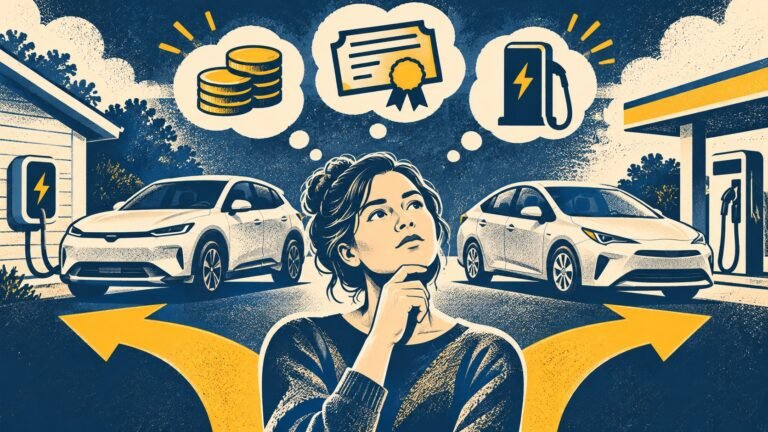
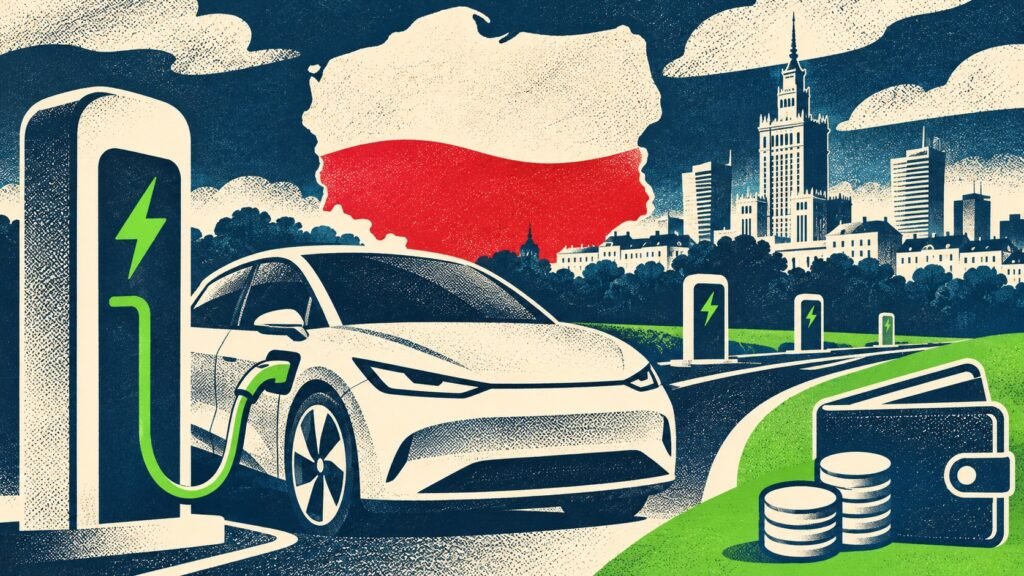
Poland’s electric car market is growing, and buyers can now compare more than the purchase price and claimed range. The useful questions are how much you would pay to charge in złoty, which stations serve your routes and whether your parking space can support regular charging. National statistics give a view of the market. A local check will tell you how an EV would fit your week.
## What the September 2026 registrations show
The Polish EV Outlook Index reported 166,579 registered battery electric vehicles at the end of September 2026. The total covers fully electric passenger cars, light commercial vehicles and heavy-duty vehicles. The index also reported a 6.1 percent share for battery electric cars in the new passenger car market in September. The fleet figure describes vehicles already registered, while the market share describes new passenger cars for the period. PSNM September 2026 PEVO Index
## Check coverage around your home and on the motorway
The same index reported 13,936 public charging points at the end of September, including 7,113 direct-current points. A point is an individual charging outlet, so the total can include several outlets at one location. For everyday use, check the chargers near your home, workplace and regular errands. Note parking fees, opening hours and whether your chosen car is compatible. For an intercity trip, identify a second site before your planned stop, particularly if you will travel in winter or at a busy time.
## Compare prices in złoty per 100 kilometres
If a car uses 18 kWh per 100 kilometres, multiply 18 by the price you pay per kWh. At an illustrative PLN 1 per kWh, the energy cost is PLN 18 per 100 kilometres. At PLN 2.50 per kWh, it rises to PLN 45 before other charges. Use your own tariff and allow for charging losses and changes in consumption. Include the cost of a home installation, subscriptions, parking and any fee that applies after a charging session ends. Check current public rates directly with the operator.
## Ask for written details before committing
Compare written offers on the same basis, including the vehicle, any required finance and the equipment you need for charging. If a dealer includes a subsidy in an advertised price, ask for the name of the program and verify eligibility, funding availability and deadlines with the administrator. If you buy used, ask for the battery warranty, evidence of battery condition and a record of the car’s service history. Confirm that the car can charge at the stations you intend to use and that the seller supplies any cable included in the offer.
Before signing, map one typical workweek and one winter intercity trip. Estimate where you would charge, how much time you would spend and how you would adapt if the preferred charger was unavailable. If you live in a shared building, resolve installation permission and metering with the property manager early. Compare your results with the costs and convenience of keeping your current car or choosing a hybrid.