Electric car sales are growing worldwide, but the usefulness of an electric vehicle still depends on what you can buy locally and where you can charge. A household with an assigned parking space and predictable daily trips faces a different decision from a driver who rents an apartment and uses public chargers. Start by mapping your regular trips and getting local price quotes, then use global data to understand why the options may be changing.
Separate observed sales from the 2026 forecast
The International Energy Agency reported more than 20 million electric car sales in 2025 and projected about 23 million for 2026, or 28 percent of total car sales. The 2026 number is a forecast. Regional sales, policies and affordability vary, so a global share cannot tell you what will be available at a dealership near you. The IEA’s electric car figures include battery electric and plug-in hybrid cars. IEA Global EV Outlook 2026
Compare the cost of ownership in your own currency
Price the vehicle with fees, then add insurance, financing and any home charging installation. Verify local incentives and eligibility before counting them. For energy costs, multiply your annual distance by the car’s energy use per kilometre or mile, then by what you expect to pay for electricity. Run the calculation twice if you may split charging between home and public stations. Compare a petrol or hybrid alternative on the same distance, ownership period and financing assumptions. If resale value is uncertain, test more than one estimate.
Check charging where you would actually use it
For a home charger, confirm parking access, installation permission and whether your electrical supply can support the equipment. Ask for a written installation quote. For public charging, look at locations on your daily routes and at the stops you would use on a long trip. Check connector compatibility, payment methods, opening hours and recent reports about reliability. An advertised peak charging speed describes only part of a session. The time needed to reach your target also depends on the vehicle, battery temperature and the charge level when you plug in. IEA analysis of EV charging
Compare electric cars and hybrids on the same trip
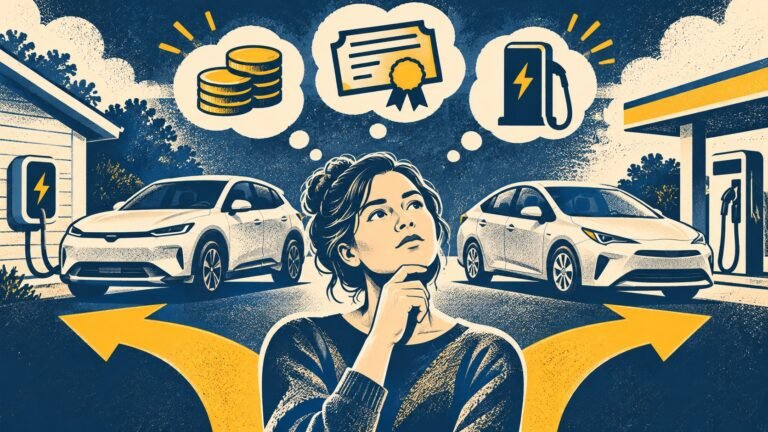
A battery electric car runs on stored electricity. A plug-in hybrid can use electricity for part of a trip and use its engine when needed. A conventional hybrid refuels with petrol and does not plug in. For a plug-in hybrid, estimate how often you could actually charge it before assuming you will cover most short trips on electricity. For a battery electric model, plan one trip you often take in cold weather or at highway speeds. Pick a charging stop and a backup, and allow a buffer for conditions that reduce range.
Before buying, test-drive the specific trim, compare its warranty and review the charging plan with everyone who will drive it. If you are considering a used EV, ask about battery condition and what remains of the battery warranty. The most useful comparison is the one that shows what the car would cost and how you would use it during an ordinary week.