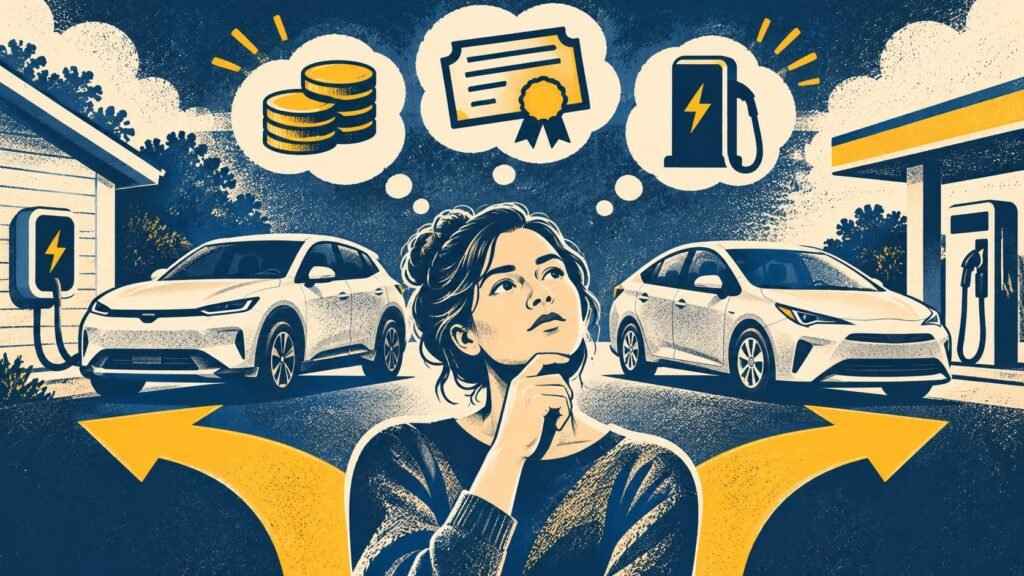
A battery electric car, a plug-in hybrid and a conventional hybrid solve different problems. To choose between them in 2026, start with the longest trip you make regularly and the parking spot you use most nights. Those two details tell you whether charging would become part of an existing routine or add a new stop. Then get written quotes for specific trims so you can compare the cars on the same terms.
## What changed after federal EV credits ended
The IRS says the federal new and previously owned clean vehicle credits are unavailable for vehicles acquired after September 30, 2025. A car acquired by that deadline and delivered later may still qualify if the buyer meets the applicable requirements. For a new purchase in 2026, build the budget from the dealer’s written price and verify any state, utility or manufacturer offer separately. Check the exact model, purchase date and application deadline before relying on a rebate. IRS clean vehicle tax credit guidance
## Compare energy costs using the miles you actually drive
A conventional hybrid rated at 45 miles per gallon would use about 267 gallons to travel 12,000 miles. At an illustrative $3.50 per gallon, that is roughly $933. An EV using 30 kilowatt-hours per 100 miles would need about 3,600 kilowatt-hours over the same distance. At 16 cents per kilowatt-hour the illustrative cost is $576, while at 40 cents it is $1,440. These example rates show why the mix of home and public charging matters. Use the consumption rating for the specific trim and the price you would pay where you charge. Include parking or session fees and allow for differences between rated and actual consumption.
## Get the out-the-door price before comparing payments
Ask each dealer for the vehicle price, taxes, fees, trade-in allowance and optional add-ons as separate lines. Compare financing over the same term and include the interest you expect to pay. Get an insurance quote using the exact vehicle. If you can charge at home, add the equipment and installation quote to the EV budget. For a lease, compare the amount due at signing, the total of the payments, the mileage allowance and the return terms. This makes offers easier to compare even when one dealer quotes a much lower monthly payment.
## Test the charging plan before buying
Ask your building or landlord about permission to install charging, and get a qualified installer to assess the parking spot and electrical supply. If you rely on public charging, look for several locations that fit your errands. Check the connector, payment method and hours, then visit one during the time you would normally use it. For a plug-in hybrid, consider how many ordinary days you can start with a charge. For a battery electric car, map a familiar highway trip with a backup stop. A conventional hybrid may fit a driver who cannot charge reliably. An EV can fit well when charging is straightforward and its full costs are competitive.